

Digital inclusion doesn’t happen by accident – it is built through everyday encounters, clear communication, and the right kind of support. This article is about the RemoTED project’s “Digivaikuttajat” podcast, in which Leena Koljonen Sorsa shares hands-on lessons from North-Karelia, Finland, offering practical takeaways on how remote services can strengthen participation, competence, and meaningful interaction.
In the second episode of the RemoTED project’s podcast series, remote‑guidance expert and work and day‑activity instructor Leena Koljonen‑Sorsa (picture 1) shares her experiences of remote services in Siun sote, the Wellbeing Services County of North Karelia. The discussion shares the everyday realities, possibilities, and practical insights of remote guidance. The conversation concludes with a look into the future and concrete tips for social and healthcare professionals.
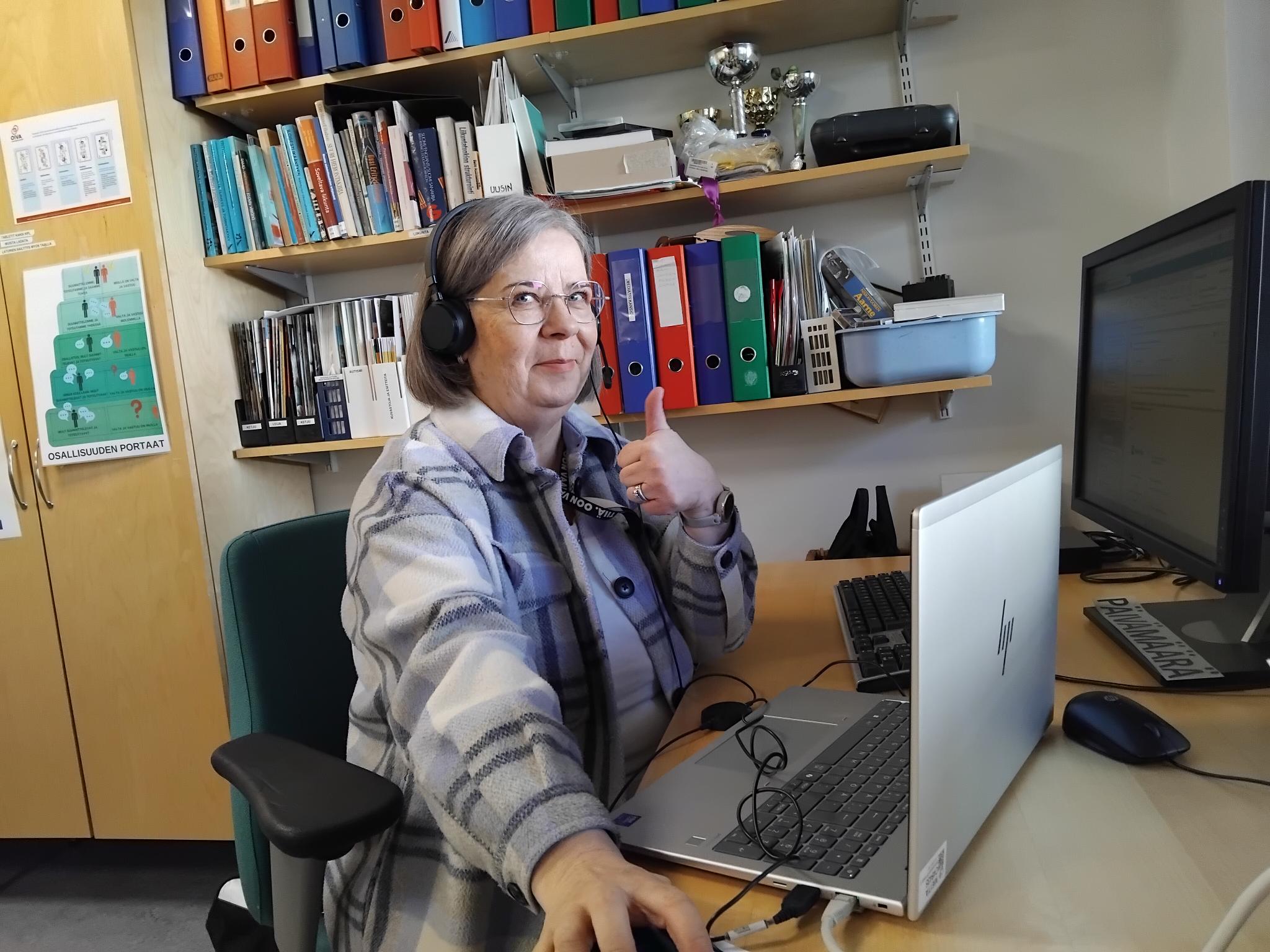
Learning and Being Together
Siun sote’s disability services have offered remote services for six years, developing them into a diverse service model. Both group and individual services are provided remotely through Teams. Clients from up to 11 municipalities in North Karelia participate through remote connections.
The activities include:
• Open remote day activities (weekly programme, no participation limits)
• Courses (a twice‑yearly offering based on client wishes)
• Remote groups (two groups meeting weekly)
• Employment coaching (a six‑month group focusing on digital‑service guidance)
• Separate trainings and groups, where participants can complete, for example, the hygiene passport
Remote services gather at 4,000–5,500 participation events annually. Any disability‑services client may try the service if they wish. To participate, the client needs a quiet space, a device, an email address, and Teams. Support for participation is provided. The age range is 18–65, with most participants between 20–30—already generally skilled with smartphones and similar tools.
“But the thing clients wish for most in the surveys is connection—talking, new friends, seeing familiar people. This is our meeting channel, just like it was meant to be from the beginning.”
Course topics come directly from client wishes collected in an annual survey. Particularly popular courses have included ones on self‑determination and emotional skills. Other popular sessions include music moments, pastor’s sessions, celebrations, dance, crafts, and cafés. Clients are enthusiastic about learning new things, but still – interaction and conversation with familiar people remain the most important elements.
Special Features of Remote Guidance
“We aim for quality rather than quantity. Quality is more important to us—that everyone is heard, seen, and understood in the group.”
Remote guidance emphasizes plain language, and supporting signs can be used. Microphones and cameras remain open to increase interaction. Group sizes are kept moderate to ensure quality. Overall, the same principles apply as in‐person guidance: clients are considered individually; everyone gets a turn to speak, and the aim is for each participant to feel seen and heard.
Clients also have a significant role. They may serve as peer instructors in remote sessions. Peer‑led topics include dance, skin care, travel, and presentations of personal hobbies. Clients also prepare regional news for joint meetings held between wellbeing service counties. Peer instructors receive support and clear instructions. Common rules have been agreed upon, and reminders can be given when necessary—though conflicts are extremely rare.
Technical considerations are essential. It must be ensured that the client finds the link and knows how to join. Near Finland’s Eastern border, connections may be weak, which sometimes prevents joining. For data security, participants must be registered for the course, and cameras are at least in the beginning. No recordings are made, so permission is not needed. Clients can participate from home or from an activity centre; before the course begins, staff often call to ensure that the client has a quiet space and the conditions needed for participation.
The Significance of Remote Services Now and in the Future
According to feedback, the most important aspect for clients is encountering others. New friendships have formed, and old ones have been rediscovered through remote meetings. Remote day activities are easy to join because they are not tied to a location. Clients’ social networks expand, their confidence grows, and their digital skills improve. Peer instruction has strengthened self‑esteem.
For employees, remote activities offer the opportunity to guide them from anywhere. Work engagement has increased, and staff can apply their expertise flexibly. They also gain opportunities to network with other units. Two other wellbeing service counties (Western Uusimaa and Southwest Finland) collaborate, offering joint sessions that expand and diversify the selection.
At the organizational level, remote services have increased regional equality, and a wide range of expertise is accessible across all disability services. Feedback for development is continuously collected (via Forms, Roidu, and verbally), and the annual client survey shapes future content. The number of participants has grown, and the future of remote services looks bright!
You can find “Digivaikuttajat” podcast and second episode “Encounters at a Distance” from Karelia UAS´s Spotify channel: Karelia Podcast | Podcast on Spotify.
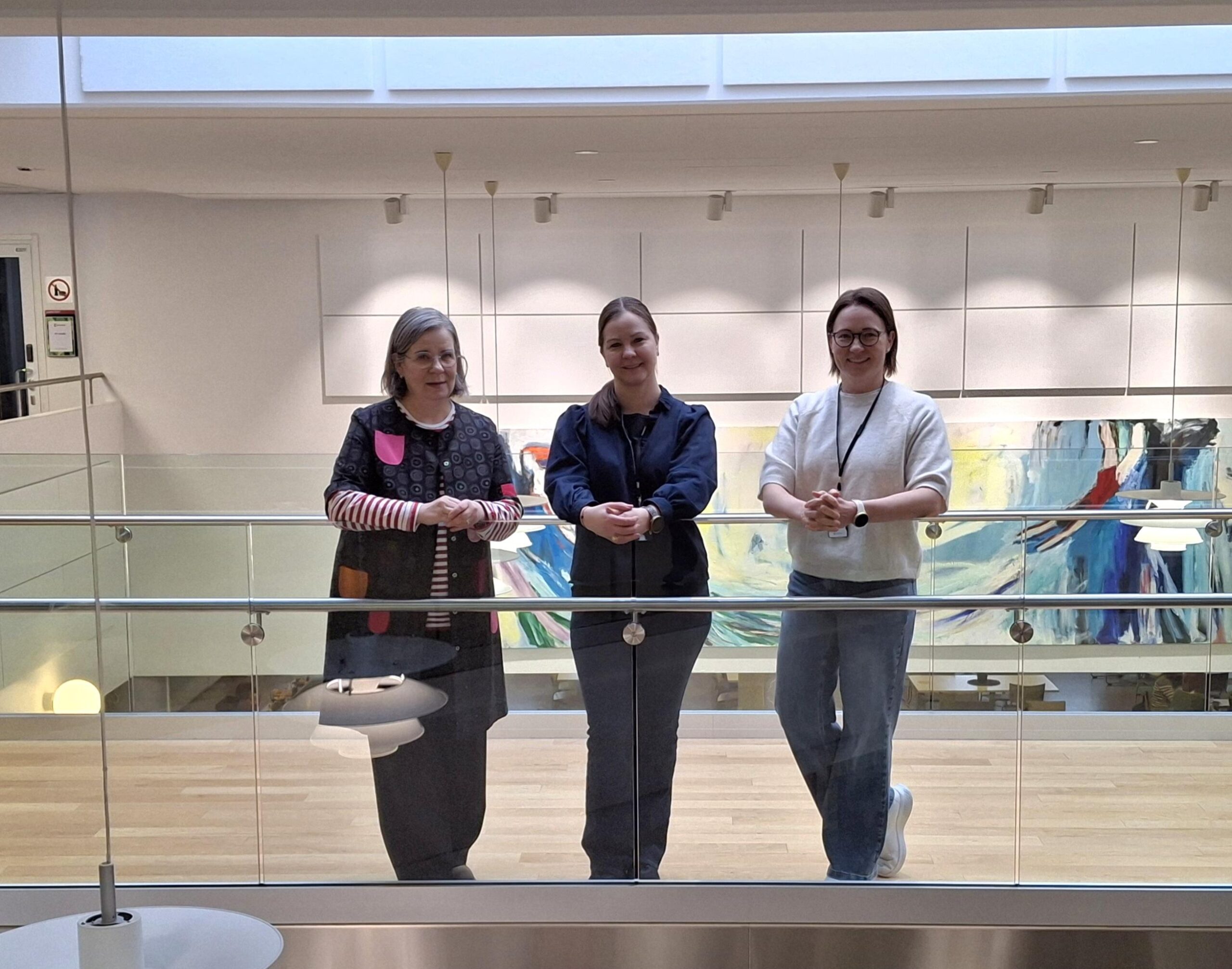
Authors:
Sanna Ahponen Käyhkö, Project Specialist and Lecturer, Karelia University of Applied Sciences
Suvi Leppänen, Project Specialist, Karelia University of Applied Sciences
Jaana Kurki, Project Manager, Karelia University of Applied Sciences
The publication was translated into English with the help of M365 Copilot AI.
The authors work in the Digital and Technological Social and Healthcare Enhanced Delivery in Remote Areas project, implemented by Lapland University of Applied Sciences (lead partner), Karelia UAS, Atlantic Technological University, and the University of Iceland. The project runs from 1 February 2025 to 31 January 2028. It is funded by the Northern Periphery and Arctic Programme.
The project’s total budget is €972,830.42, with €523,831.78 in ERDF funding. Karelia’s share of the budget is €403,000.04, with €261,950.02 in ERDF funding.

