
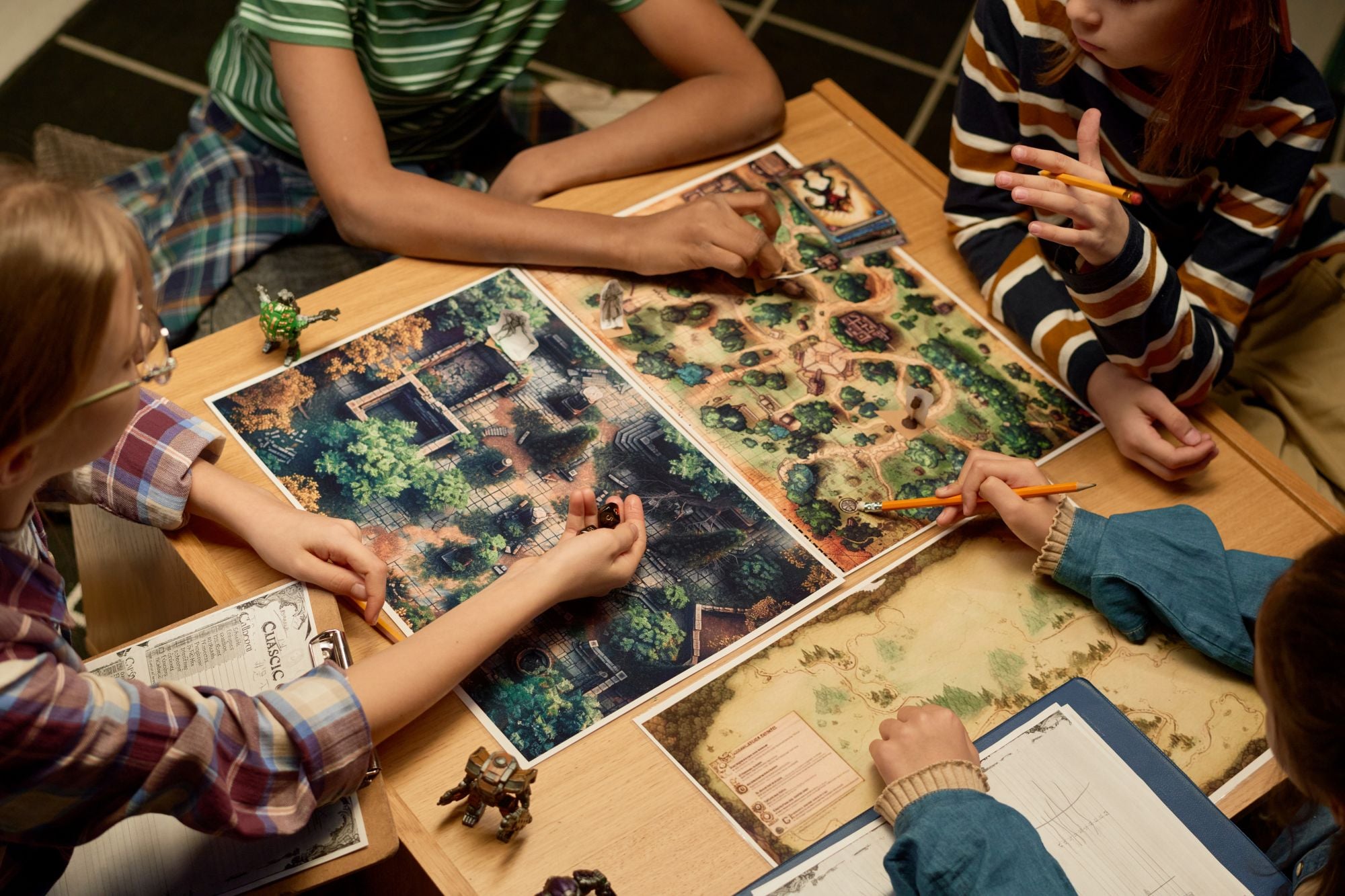
Gamification has become well established across many sectors of education and youth work, but in the social and health care sector its potential is often only just being recognized. In a Finnish-language episode of the RemoTED project’s podcast, gamification was examined together with experts from the North Karelia wellbeing services county (Siun sote). In this article, we highlight key themes from the podcast’s content.
Gamification in Staff Competence Development and Youth Services
Ville Tahvanainen works at Siun sote as a competence development planner in staff development services. His work includes gamification, through which the team seeks new and more meaningful ways to learn and refresh skills. Gamified solutions have been used, for example, in staff onboarding, familiarising employees with work environments, and supporting continuing education.
According to Tahvanainen, gamification is not an end in itself but one method within a broader approach to competence development. As he notes, “gamification is widely known as a useful and inspiring way to learn and revise new things.” It works particularly well for activation and revision, especially when learning is connected to everyday practice. Even a small gamified element—such as a quiz or a shared task—can increase motivation and lower the threshold to participate.
Miika Miljuhin also works at Siun sote as an instructor in services for families with children and uses gamification in client work with young people (Figure 1). He has developed the EPELI activity, aimed at 13–17-year-olds and delivered entirely online. The activity combines game education, community and shared gaming between professionals and young people. Gamification offers young people a natural and safe way to meet professionals, practise interaction skills and address everyday topics. At the same time, it helps professionals understand young people’s world and strengths from a new perspective. Gaming serves as a conversation starter and supports a sense of belonging, especially for young people for whom traditional forms of activity do not feel relevant.
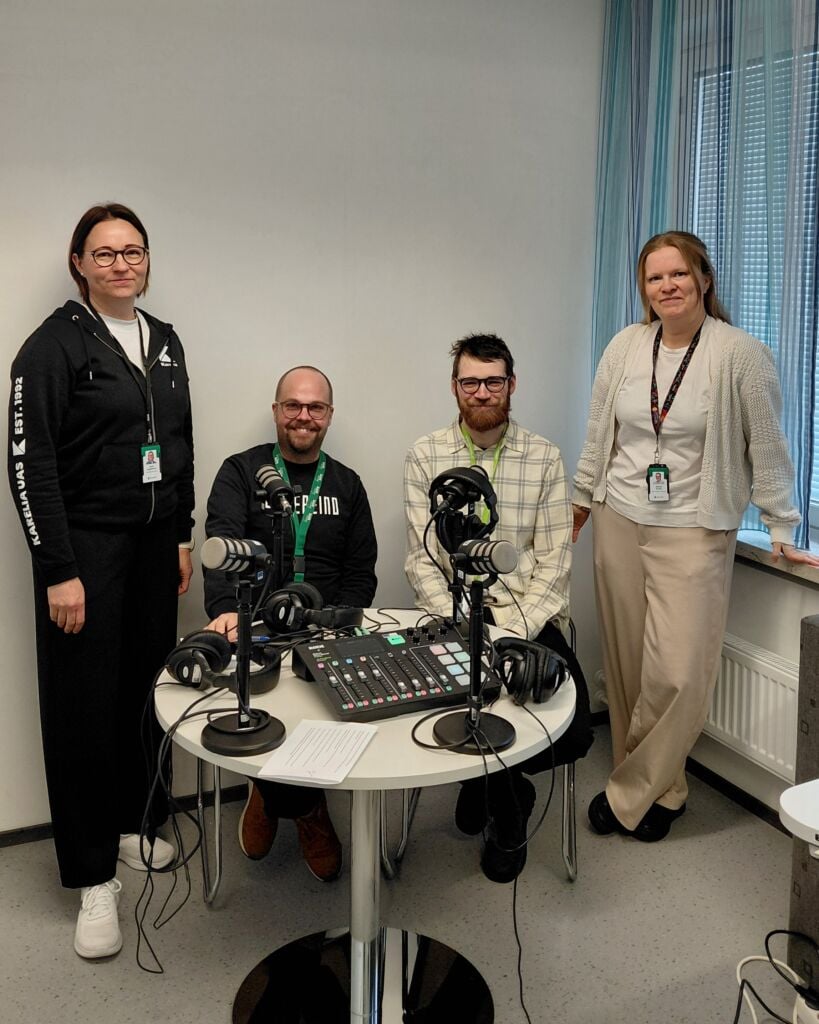
Learning Can Also Happen, in a Way, “By Accident”
Feedback from both young people and staff on gamified solutions has been largely positive. Gamification is seen as an inspiring way to learn something new while also accommodating different learners’ needs. Topics that may feel difficult for a young person to discuss—or to raise in everyday life—can often be addressed through games. These may include, for example, independence, considering others, or interaction skills. When the focus is on doing, problem-solving and working together, learning can happen almost without noticing.
Challenges can arise especially during the first sessions, when using a device or tool may draw attention away from the actual content. With repetition, the gamified way of working becomes easier and learning deepens. A shared debrief is also essential: after the game, you pause to reflect on what was learned and how it can be applied in practice.
Accessibility and the Considered Use of Gamification
Accessibility is a key issue in gamification. Content needs to be clear, versatile and usable on different devices so that as many people as possible can participate. Tahvanainen notes that plain language is considered for accessibility, as some employees may have limited Finnish language proficiency.
Gamification is not suitable for every theme. In particular, competence related to patient and client safety—or ethically sensitive topics—requires careful consideration and often calls for other primary learning methods. Gamification works best as part of a broader whole: it supports other learning rather than replacing it.
When working with young people, accessibility also needs to be considered—for example, in relation to the devices available. So-called cross-play means you can join the same game from a computer or a phone and still share the same game world. Miljuhin also notes that he sees it as a positive thing that youth services offer gaming equipment for communal gaming.
Youth Work Digitally and Face-to-Face
Karelia University of Applied Sciences’ RemoTED team visited Nuorisoklubi Pulu in Polvijärvi, where youth work is carried out both face-to-face and via remote connections. The digital youth club activities started during the COVID-19 pandemic in Nurmes, and since then they have been further developed. Today, the activities are delivered across Eastern Finland via the eNuokkari Discord server.
During the visit, under the expert guidance of youth worker Ville Hyvönen, we were able to explore the digital youth club’s activities and how the Discord platform supports meeting young people and building community in a digital environment. At the same time, we gained a valuable view into everyday youth work and noticed that alongside digital solutions, more traditional games are still an important part of young people’s leisure time.
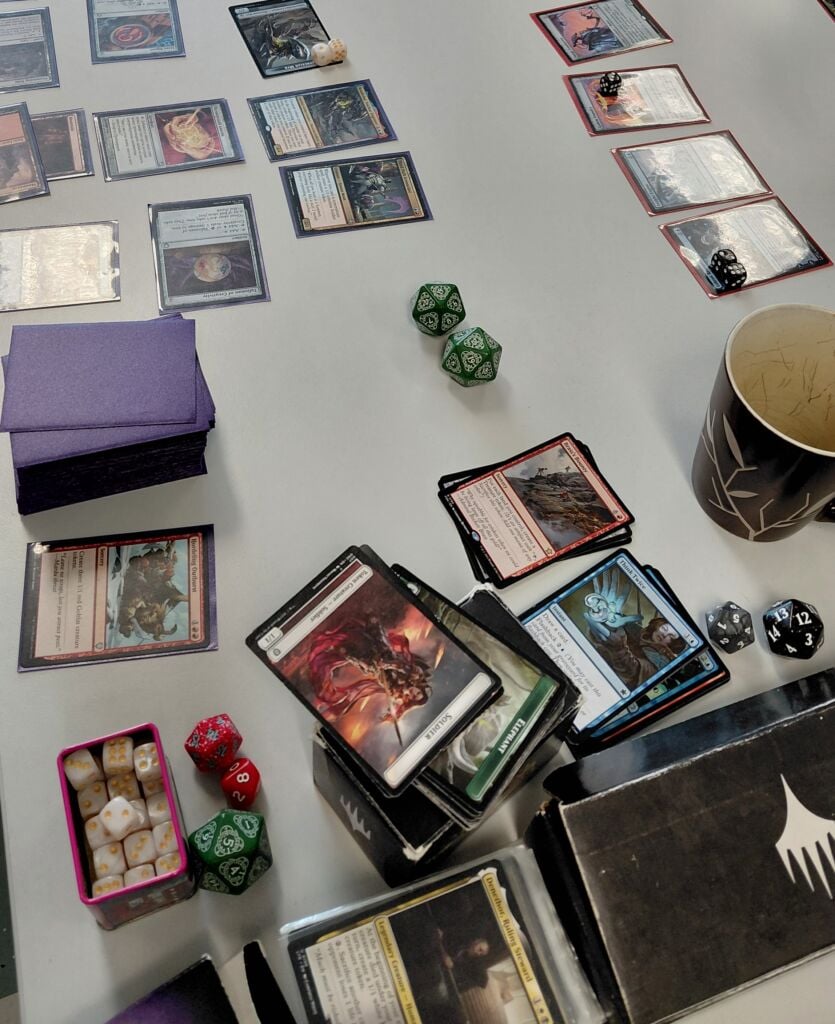
The young people introduced us, among other things, to the trading card game Magic: The Gathering (Figure 2). As we watched, we also noticed that it enables learning and the development of skills such as strategic thinking, interaction skills and a sense of community. The visit offered interesting perspectives on the significance and potential of gamified methods as part of modern youth work.
Gamification as Part of Future Social and Health Care Services
Both in the podcast discussion and during the visit to Polvijärvi’s digital youth club, the need emerged to increase understanding of gamification and to break down related preconceptions. Gamification does not mean only light entertainment; it can also be goal-oriented and planned activity that, at its best, increases motivation, inclusion and the joy of learning.
From these experiences, we learned that with small trials, the courage to test new approaches, and by discussing together, we can advance the use of gamification. In this way, we create a foundation for gamification to find its place even more effectively in the future as part of everyday social and health care work and competence development.
Authors:
Sanna Ahponen‑Käyhkö, Project Specialist and Lecturer, Karelia UAS
Suvi Leppänen, Project Specialist, Karelia UAS
Jaana Kurki, Project Manager, Karelia UAS
The publication was created with the support of M365 Copilot AI, which was used to edit the podcast transcript into an article format and to translate the publication into English.
The authors work in the Digital and Technological Social and Healthcare Enhanced Delivery in Remote Areas project, implemented by Lapland University of Applied Sciences (lead partner), Karelia UAS, Atlantic Technological University, and the University of Iceland. The project runs from 1 February 2025 to 31 January 2028. It is funded by the Northern Periphery and Arctic Programme.
The project’s total budget is €972,830.42, with €523,831.78 in ERDF funding. Karelia’s share of the budget is €403,000.04, with €261,950.02 in ERDF funding.
