
European University Alliances (EUAs) represent one of the most transformative developments in European higher education. They aim to reshape how universities collaborate by creating shared campuses, joint practices, and long-term structures for mobility, research, innovation, and societal engagement. This evolving model encourages institutions to work not only with Europe but as Europe, aligning strategies, infrastructures, and learning ecosystems across borders.
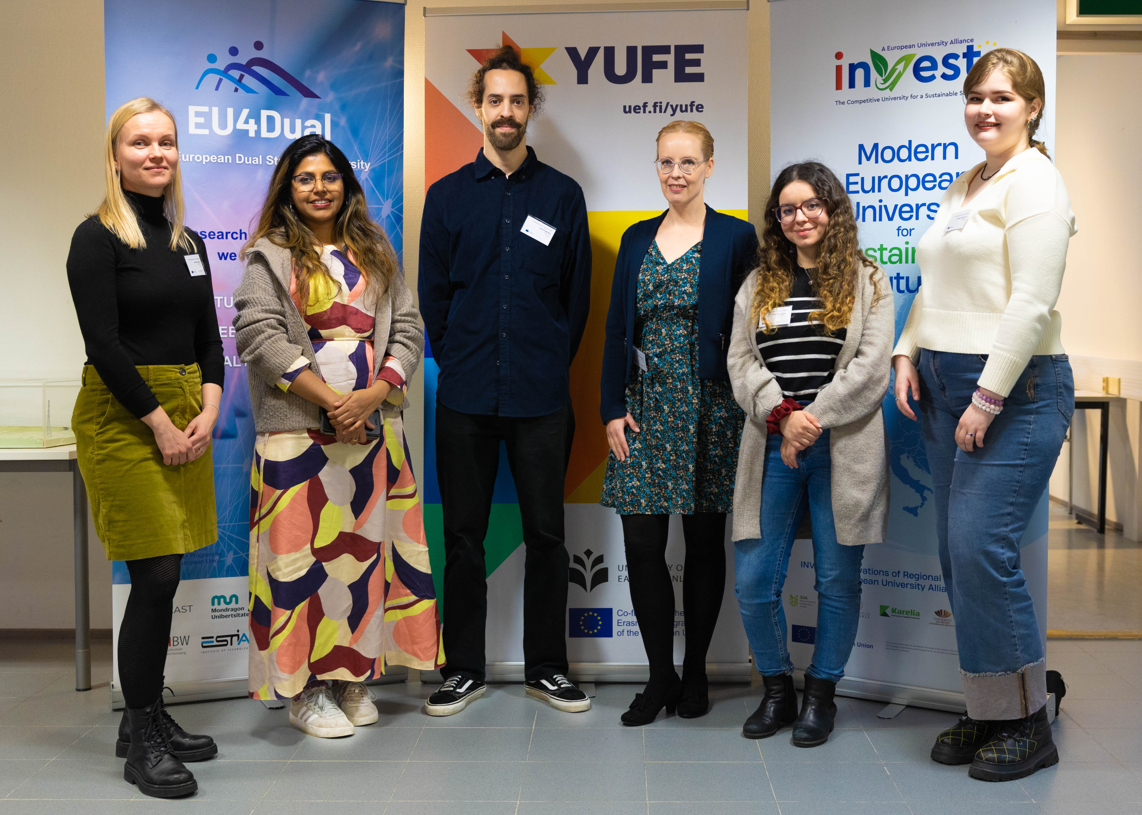
This year’s European Universities Networking Day was hosted by Karelia University of Applied Sciences (INVEST), Savonia University of Applied Sciences (EU4DUAL) and University of Eastern Finland (YUFE) together with the Finnish National Agency for Education (EDUFI). This event gathered representatives from 23 alliances across Finland. The programme offered a comprehensive collection of workshops addressing key dimensions of alliance development. This report synthesizes insights from those sessions, drawing on full workshop descriptions where available and offering concise summaries where applicable.
Insights from the Workshops
Mobility – Physical, Virtual, Blended
International Officer Antonia Stavridou from Karelia UAS took part in workshops on Mobility—Physical, virtual, blended and Integration of data systems: Peppi and Sisu vs. Virtual campuses. One major issue regarding student mobility is achieving the target of 50% student participation in some form of mobility or benefiting from the alliance. Some key takeaways and successful initiatives discussed included creating virtual courses that can be embedded as mandatory components within degree programs. For example, the U!REKA alliance co-created a 1 ECTS course on Sustainability now required for all BA-level programs at Metropolia and other U!REKA partners, which could significantly help meet the commission’s mobility goals. Another great example, which can contribute to the increase of mobility numbers, is the creation of mobility windows. During this session, the example of Arquis alliance was presented which opens annual funding calls to support creation of mobility windows.
Other important points involved expanding opportunities for student exchanges by negotiating and opening more places among alliance partners and actively promoting these options to students as a method to ensure an exchange abroad. Engaging teachers and faculties to offer more opportunities, reach a broader range of students, and involve additional staff was also emphasized.
Regarding virtual mobility, it was noted that a shared definition still poses a challenge and is something to work towards to. Small introductory experiences—such as offering a day of lectures from various alliance partner institutions to all alliance students (as practiced by Jamk UAS)—were suggested to boost interest and involvement.
Integration of Data Systems – Peppi, Sisu & Virtual Campuses
This workshop highlighted that European University Alliances are working towards more interoperable digital systems, but key obstacles remain. Limited integrations between common platforms and systems like Sisu create a lot of manual work in course sharing, applications, and recognition processes. Challenges also stem from low authentication assurance levels, inconsistent student registration pathways, and the lack of fully integrated European Digital Credentials. Improving identity management, strengthening authentication, and harmonizing institutional identifiers were highlighted as essential steps toward smoother cross‑border learning and administration.
The workshop also provided an overview of the digital tools currently available at both EU and national levels. Participants were introduced to the Data Space 4 Skills project and its potential integration with SISU and Peppi, as well as the use of eSeals for skill recognition through Europass or EUwallet. EMREX, which enables automatic credit recognition for studies abroad, was also discussed.
The central takeaway was that alliances already have access to a rich ecosystem of digital tools. Rather than developing new systems, it is more effective to familiarize ourselves with these existing resources, follow national guidelines, and keep partners informed.
Impact and Student Engagement – Goals, Inclusiveness, and the Bigger Picture
Senior project researcher Kristiina Väänänen participated in the discussions on the impact of alliances (“What’s in it for us?”) and student engagement. These discussions highlighted two central questions. The first concerned the direction of alliance goals – whether institutions are primarily following the objectives set by funders or whether they can effectively integrate their own strategic aims within alliance frameworks. The second question addressed inclusiveness. Many smaller European higher education institutions have limited resources for international engagement, raising concerns about whether all partners can participate equally. There was also reflection on whether alliances receive so much attention that they overshadow other valuable international partnerships. The shared conclusion was that institutions should maintain awareness of the broader international landscape and remember cooperation opportunities beyond Europe.
Sessions on communication and engagement noted that many students remain unaware of alliance activities, and that personal interaction combined with consistent messaging across institutions is the most effective way to reach them. Workshops addressing impact and joint degrees highlighted the need for mixed-method evaluation approaches and called for clearer national guidelines to support the development of joint European degrees.
Global Engagement in EUIs, Including the Global South
The workshop examined how alliances can form equitable and meaningful collaborations beyond Europe. Discussions underscored the value of mutual learning, flexible partnerships, and joint supervision models, along with the need for accessible digital platforms and diverse funding opportunities. Participants agreed that partners in the Global South bring vital contextual knowledge and expertise to these collaborations. A key reflection was the importance of engaging without assumptions about “providing solutions,” and instead developing partnerships built on equality, responsibility, and reciprocal benefit.
Research & Innovation – Karelia UAS Chairs Session
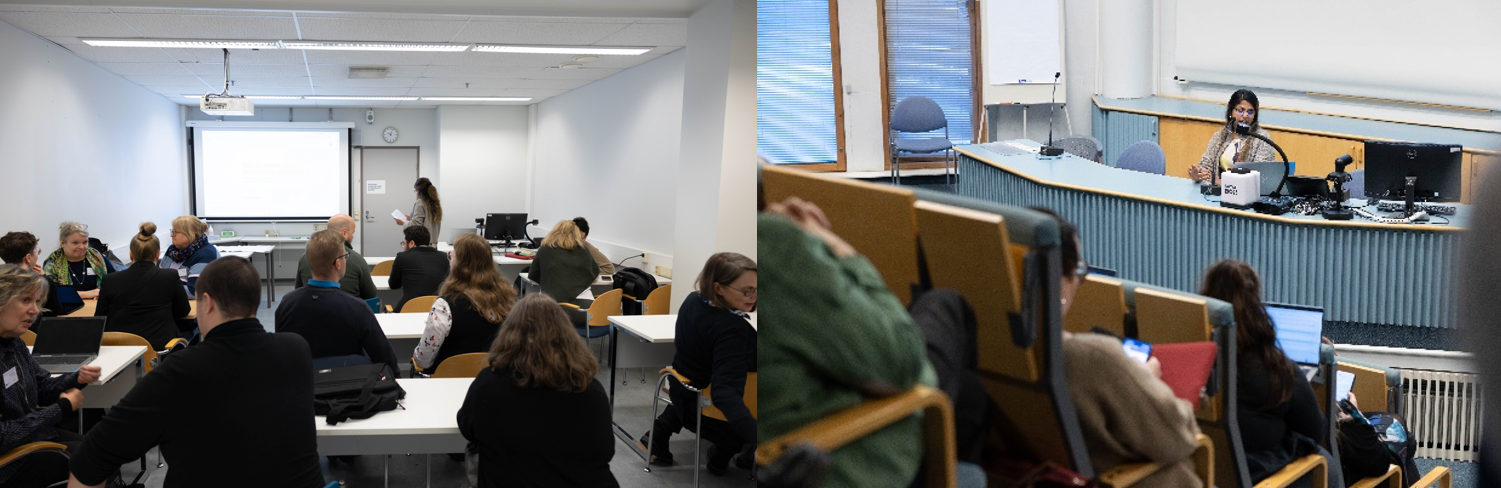
Grant Writer Shammi Keya from Karelia UAS co-chaired the workshop Research and Innovation: How can European University Alliances drive impactful research and innovation? with Senior Advisor Anne-Maria Mäkelä from SEAMK. The session explored how alliances can enhance joint research agendas, improve access to competitive funding, and strengthen innovation ecosystems. Two cases were presented to illustrate effective practices and lessons learned.
Case 1: U!REKA SHIFT – Joint R&I Agenda
José Camposano (Metropolia) described U!REKA SHIFT’s two-year process of developing a coordinated research and innovation agenda. A clear combination of strategic direction and researcher-driven engagement was considered crucial. Demonstrating added value, building advisory structures, and distinguishing between alliance, institutional, and project governance helped ease collaboration and clarify responsibilities. Alliances were positioned not merely as funding sources but as platforms for capacity building, shared infrastructures, and resource optimisation.
Case 2: UNIC – Engaged Research
Dr. Sari Hirvonen-Kantola (University of Oulu) presented UNIC’s approach to engaged research, which integrates universities closely with their surrounding cities. The model relies on living labs, broker teams, long-term partnerships, and seed funding. Understanding each partner’s financial model and supporting proposal development were highlighted as essential steps for effective alliance-level RDI activity.
Shared Insights for Joint R&I Work
Across alliances, participants noted that EUA structures can serve as strong platforms for research cooperation. Mapping researcher expertise helps identify opportunities for targeted collaboration, and involving stakeholders enhances both impact and researcher motivation. Resource pooling was seen as a practical way to reduce costs. At the same time, coordinating education and research activities, managing multi-level governance structures, and navigating differing partner strategies and funding models continue to pose challenges. Proposal development remains a notable bottleneck for many institutions.
Additional Workshop Takeaways
The workshop on student-led communities emphasized treating students as partners rather than participants. Karelia UAS’s student participants Simo Piepponen and Svetlana Semenova brought out the student perspective for the sessions throughout the day. Since students are one of the main target groups of the alliances, it is one of the most important approaches to co-create the alliances with our students.
Practices such as ambassador programmes, hackathons, and structured onboarding were identified as effective ways to support continuity and engagement. Discussions on added value and governance noted that while alliances introduce new processes, they also create important opportunities for long-term strategic alignment across institutions. Communication-related sessions pointed out that many students remain unaware of alliance activities, and that personal engagement and consistent messaging across institutions are critical. Workshops addressing impact and joint degrees highlighted the need for mixed-method evaluation approaches and called for clearer national guidelines to support the development of joint European degrees.
Reflection
Collectively, the workshops provided a broad and nuanced picture of European University Alliances as they continue to evolve. A common theme across sessions was the shift from establishing structures to embedding sustainable practices that generate visible benefits for students, staff, institutions, and regional partners. Digital readiness, more inclusive mobility pathways, meaningful student participation, clear governance models, and strong alliance-level research collaboration emerged as central priorities.
For Karelia UAS, participation in and leadership of the RDI-focused session reaffirmed the importance of building shared research agendas, strengthening proposal development support, and encouraging collaboration through local and international stakeholder relationships.
Future Thoughts
Looking ahead, Finnish institutions appear committed to deepening their involvement in European University Alliances. For Karelia UAS, promising directions include systematically embedding virtual mobility into programme structures, making fuller use of existing digital tools, supporting student-led initiatives, and expanding engagement with global partners- especially in the Global South. Strengthening alliance-level research and innovation efforts, particularly through better coordination and shared resources, will continue to play a vital role. Through ongoing cooperation and knowledge sharing, alliances can mature into dynamic ecosystems that sustain innovation, global collaboration, and the future of European higher education.
The event page and materials can be found here.
Authors:
Shammi Keya, Grant Writer, Karelia UAS
Antonia Stavridou, International Officer, Karelia UAS
Kristiina Väänänen, Senior Project Researcher, Karelia UAS
Simo Piepponen, trainee, Karelia UAS